A prior planning session locked brand choices (Denon AVR-X3800H, Klipsch RP-II full stack) that were never actually shopped against alternatives. This doc resets that. "Working direction" = where we're heading and what to plan around. "Open" = still to shop when ready. Nothing here is locked unless the furniture board or a future session says so explicitly.
Screen format
98" TV Working dir
Not projector (too much geometry complexity for mount, and 98" hits ~42° FOV at viewing distance — close to "immersive" band). Wall-mounted on the 132" south wall.
Audio configuration
5.1.2 now, pre-wire 7.1.4 Working dir
Run 5.1.2 at purchase (300 sqft makes it genuinely immersive). The budget freed by going mini-LED instead of $25k OLED makes a bigger layout the high-value play, since audio drives "movie-night feel" far more than panel tech here. So plan for 7.1.4 (4 heights + rear surrounds). ACCESS REALITY: the den ceiling is finished and NO contractor work opens it (mini-split is not in the ceiling). Wiring + in-ceiling speakers depend on attic/crawlspace access above the den slopes (being assessed). If the cavity is reachable from above, an installer can pull runs and cut in heights with no ceiling demo. If not, the fallback is up-firing Atmos height modules on the tower tops (zero ceiling work), which perform reasonably under a vaulted ceiling.
Front speakers form factor
Floorstanding towers Working dir
Towers flanking 98" TV. 132" wall leaves ~22" per side after the TV — tight but workable for towers ~11" wide. Rules out 120"+ screens (no tower clearance).
Side surround placement
In-ceiling on slopes Working dir
Side walls (east/west) unavailable — east is occupied by sectional's chaise zone, west has stairwell cutout. Both sloped ceilings have confirmed void (HVAC registers on both), making in-ceiling install practical.
Rear surround placement
Behind sectional Future 7.1.2
Mount on left wall (sectional back wall), above the 32-36" sofa back. Sectional pulled 6-12" off wall gives sound path clearance over the back cushions to ears. Pre-wire during paint/electrical work.
Receiver brand & model
Leaning — Denon X3800H Working dir
Leaning Denon AVR-X3800H (carried at Video Only). With the target at 5.2.4, a 9-channel receiver powers it natively, no 11-channel unit or external amp needed. The X3800H also processes 11.2, so if 7.x.4 is ever added later, a 2-channel amp covers the extra heights. Confirm it's the X3800H (current), not an older X3700H on clearance.
Speaker brand
Open Not shopped
Klipsch RP-II is one candidate (high sensitivity, value), but SVS Ultra Evolution, KEF Q series, Polk Reserve, Monitor Audio Silver all viable. Speaker brand choice affects receiver power needs — shop together.
Subwoofer
Open Not shopped
One sub is plenty for 300 sqft (skip 7.2.2). 12-15" driver, sealed or ported, 400W+. SVS, Rythmik, HSU, Klipsch all have strong options in $700-1,500 band.
TV brand & model
98" mini-LED — leaning, not locked Working dir
98" is the current lean (immersion; Peter wanted bigger after seeing them in stores), not a final call. IF 98" holds, panel type is effectively mini-LED: a 97" OLED is ~$25k AND strips the new RGB Tandem panel + anti-glare coating at that size, so giant OLED is irrational here regardless of merits. NOTE: burn-in is NOT the reason OLED is out (Peter's 8-yr B8 OLED, sports-heavy, has zero burn-in; modern OLEDs mitigate even better). The real driver is cost-at-size, which frees ~$18-20k for audio. Open item = tier: halo (TCL X11, best blooming/brightness, ~$5-6k) vs upper-tier (TCL QM851G / Hisense U8, ~$3-4k, well-controlled blooming). As an 8-yr OLED owner in a dark den, Peter is sensitive to blooming, so pick the tier on blooming control. Keep Dolby Vision (this is why Samsung is out, no DV). CURRENT LEAN (May 2026): 98X11L (2026 flagship, ~20.7k zones) from Video Only at $8,599, in stock, local, they install. ~$2.6k over a $6k X11K for more zones/nits not really visible at 98"/10ft, but the X11K is sold out/clearing, so this is paying for in-stock current-gen + a local dealer who can also do the haul.
This doc's job is to capture direction + geometry so that when you shop, the decisions are about brand/price/features — not about "does this fit?" or "what config do I need?". Those are answered here.
02
Room & geometry
19'1" × 15'8" footprint with vaulted/cathedral ceiling. Ridge runs parallel to the long axis (east-west). Knee walls on the short dimensions (north and south). Stairs open up in the south-east corner with a pony wall protecting the stairwell. Window on the north wall. HVAC registers on both sloped ceilings — confirms usable void in both slopes for speaker install.
Dimensions & Constraints
Floor
229" × 188"
19'1" × 15'8" · 297 sqft living
TV wall
132"
Short wall on right · 11'
Sectional wall
229"
Long left wall · 19'1"
Ceiling peak
9'2"
110" at ridge center
Knee walls
6'10"
82" at wall-ceiling meet
Floor
Carpet
Dictates rug + wire routing
Window
74" wide
North wall · blackout shade needed
HVAC
Both slopes
Registers confirm ceiling void
Layout — Top-Down (2D)
Corner sofa
Bar / console
Towers / TV
In-ceiling speakers
Future pre-wire
Ridge runs east-west (parallel to long axis). Knee walls on the 188" short walls (the top "window" wall and bottom "stairs" wall). Slopes come down from ridge to those short walls. The TV wall and the sectional wall are both full-height, not knee walls — big advantage for tower placement and rear-surround mounting.
03
TV / screen direction
98" TV on the 132" south wall, wall-mounted. Center of screen at 46" AFF (standard seated eye-level). Top edge at ~70" AFF — clears the 82" knee wall ceiling at the TV wall with ~10-12" buffer before slope starts.
98" TV Fit Check
TV width
85.6"
Leaves 46" total on 132" wall
TV height
49.5"
Top at 70" AFF · 12" to knee
Per-side gap
~22"
Tower (11" wide) + clearance fits
Mount height
46" AFF
Screen center · seated eye-level
Viewing distance
~10'
Sectional to TV · ~42° FOV · good
Preferred panel
OLED
LG G5 97" — blackout shade planned, controlled room
Why not bigger: 120" screen would require swapping tower speakers for in-wall speakers (no per-side clearance), which compromises audio quality. Trading screen size for audio quality is the right call for a ~300 sqft room. Why not smaller: 85" at 10' viewing distance = 36° FOV, below the 40° "immersive" threshold. 98" is the right balance.
04
Audio layout
Run 5.1.2 at purchase, plan for 7.1.4 (budget reallocated from the TV). The den ceiling is finished and no contractor work opens it, so the height + rear runs depend on attic/crawlspace access above the den slopes (being assessed) or retrofit fishing. If there's no usable cavity access, up-firing Atmos modules on the tower tops are the no-demo fallback. Buy an 11-channel receiver if leaving 7.1.4 open. Side surrounds and heights would be in-ceiling given wall geometry (side walls unavailable due to sectional chaise and stairwell cutout).
Speaker Placement — Room-Specific
Role
Location
Install type
Notes
Front L/R
Flanking 98" TV on 132" south wall
Floorstanding towers
~22" per side; tower ~11" wide — fits with comfortable clearance.
Side walls (east/west) unavailable. HVAC registers confirm both slopes have void space for install.
Rear surrounds
Left wall above sofa back (future 7.1.2)
On-wall or bookshelf with bracket
Sectional pulled 6-12" off wall gives sound path over back cushions. Pre-wire now, speakers later.
Atmos heights
On tower tops, firing up
Elevation modules
Sloped ceiling reflects coherently toward listener — ideal for Atmos bounce. Better than flat ceilings.
Subwoofer
Front corner (TV wall + window wall intersection)
Standalone
Single sub adequate for 300 sqft. Run room correction to refine placement.
Pre-wire for rear surrounds during paint prep or other electrical work. Two 25-foot runs of CL2-rated 14 AWG speaker wire in-wall, terminated at wall plates near the left wall (sofa back) and at the equipment location. Materials: ~$150. Electrician marginal labor on top of existing trip: cheap. Enables 7.1.2 upgrade later without disruption.
05
Components — candidates, not locked
Working direction captures form factor and channel-count requirements. Brand/model selection happens at shopping time. Listed below: one candidate per role with rationale, plus viable alternatives.
These candidates are first-pass suggestions, not recommendations. When ready to shop, do the same exercise we did for the den sectional: 3–5 real options per category with trade-offs, sit or listen if possible, decide based on the specific room. Don't buy this full stack on a single weekend.
06
Install plan & sequence
What to do in what order, including pre-wire windows and what requires an electrician vs DIY.
Sequence
1
Measure TV wall slope on-site before buying 98" TV
Hold a tape vertically at the planned TV mount location (wall center). Mark 70" from floor (= top of 98" TV at 46" mount center). Confirm the ceiling slope hasn't cut inward at that point. If slope encroaches within 3" of the mark, consider 85" instead. Cost: 5 minutes, free.
2
Pre-wire during paint / electrical work (cheapest window)
When walls are being painted or any electrician is on-site (vanity bar swap, foyer chandelier, etc.), add these runs: (a) two CL2 14AWG runs from equipment location to left-wall rear-surround plates, (b) two runs from equipment to sloped ceiling for in-ceiling side surrounds, (c) HDMI + power from equipment to TV mount location. Materials ~$200. Marginal labor: minimal on existing trip.
3
Blackout shade for north-wall window — required for OLED
74" wide single window, north wall (opposite TV). Outside mount with side channels for true blackout — no light gaps. Committed purchase alongside TV. Motorized recommended at this price point: Lutron Serena (~$400–700) for smart home integration, or Hunter Douglas PowerView (~$600–900). Manual outside-mount roller with side channels (Selectblinds, Blinds.com) is $150–250 if going DIY. Install before first use.
4
Buy receiver first, then TV, then speakers
Receiver determines channel count ceiling (locks 7.1.2 vs 9.2.4 future). TV determines mount hardware and eARC requirements. Speakers last — brand choice locks years of timbre-matching for future additions (rear surrounds). Don't mix brands mid-system unless unavoidable.
5
Install 5.1.2 configuration
Front L/R towers, center, Atmos modules on towers, one pair of in-ceiling side surrounds, subwoofer. Run full room correction (Audyssey/Dirac/YPAO) after all components are placed and sectional is in the room — bodies on the sectional are part of the acoustic environment.
6
Evaluate for 7.1.2 upgrade later
After living with 5.1.2 for 3–6 months, decide if rear surrounds add enough to justify. If yes, add a second pair of surrounds (same brand/model as sides for timbre match) to the pre-wired plates on the left wall. Re-run room correction. If no, 5.1.2 stays as final config.
Buy sequence matters because channel count and brand timbre-matching lock in system architecture. A 7-channel receiver can't run 7.1.2 period. Mixed speaker brands can work but voicing differences are audible in a critical room like this. Sequence above prevents both trap-doors.
07
Blackout shade — north window
Required, not optional, now that OLED is the leading direction. Single 74" window on the north wall, opposite the TV. Outside-mount with side channels is the spec — a standard inside-mount roller leaves light gaps that defeat the purpose. Goal: zero light leak during daytime movie viewing.
The window in question
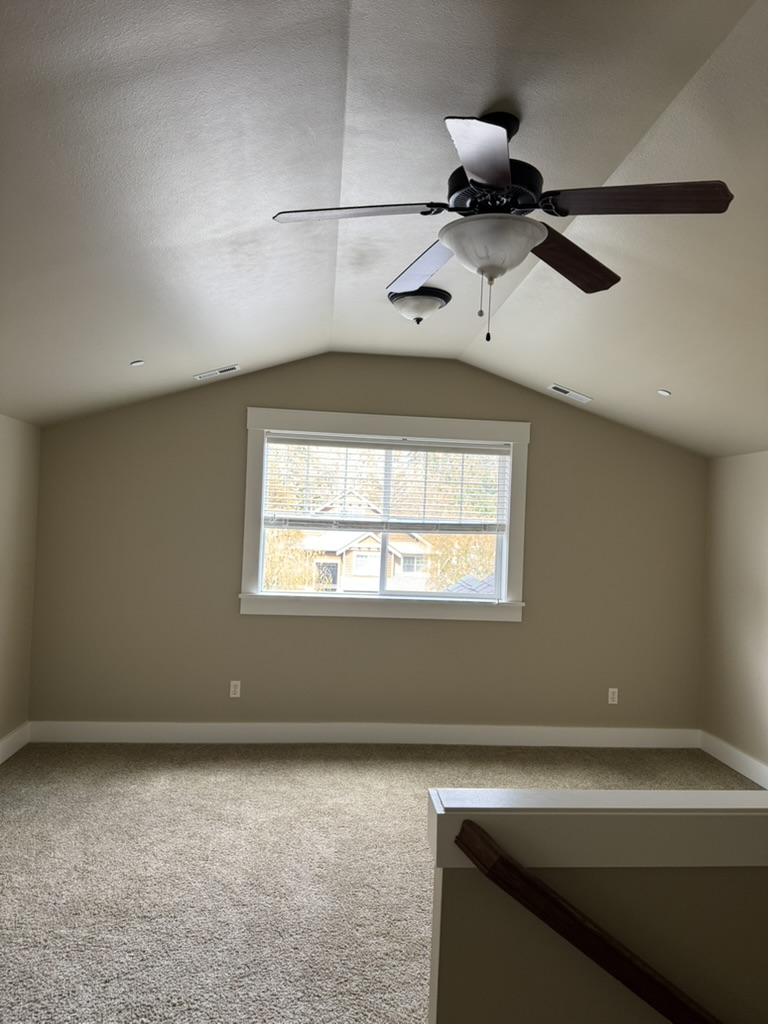
North wall · 74" wide. Knee-wall mounted, double-hung style. Faces neighbor's house — currently no privacy treatment.
Outside mount + side channels recommended over inside mount: covers the frame entirely, blocks edge light. The knee wall above the window has enough headroom for a recessed roller housing without hitting the slope.
Measure twice before ordering — exact rough opening width and the height to the slope start.
Budget · DIY
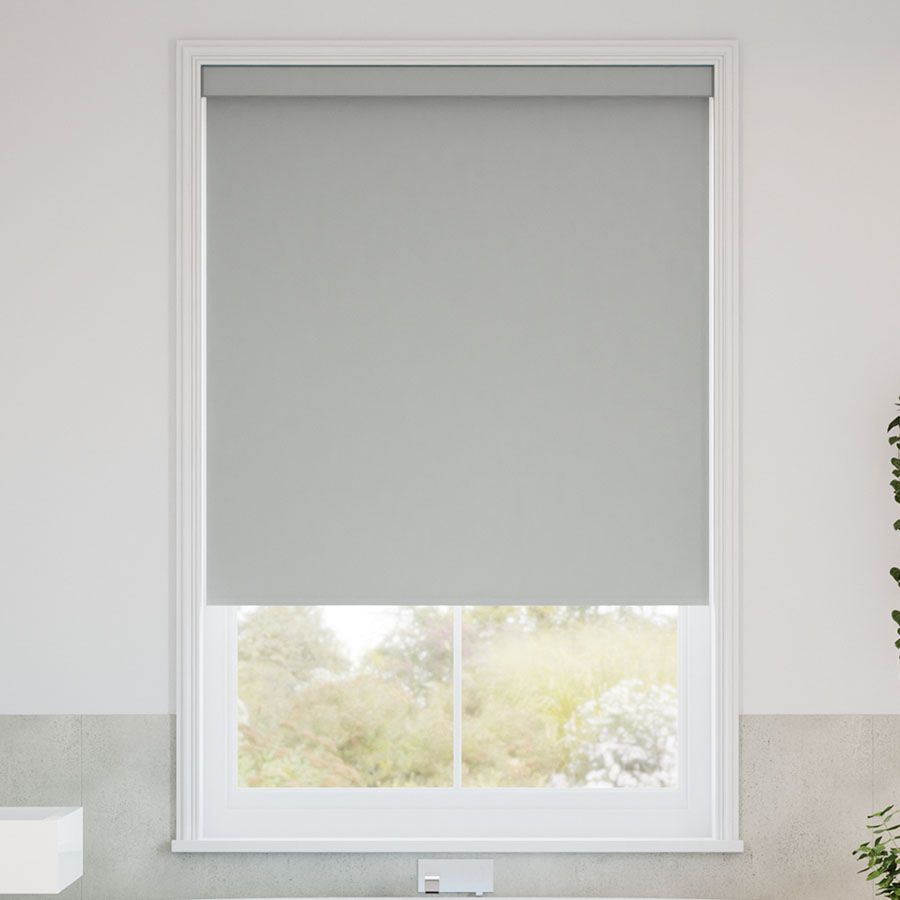
SelectBlinds Blackout Roller
~$120–220 · custom cut
Outside mount, custom-sized, optional side channels. Manual chain pull. Order online, install yourself in an hour. The right call if motorized isn't a priority.
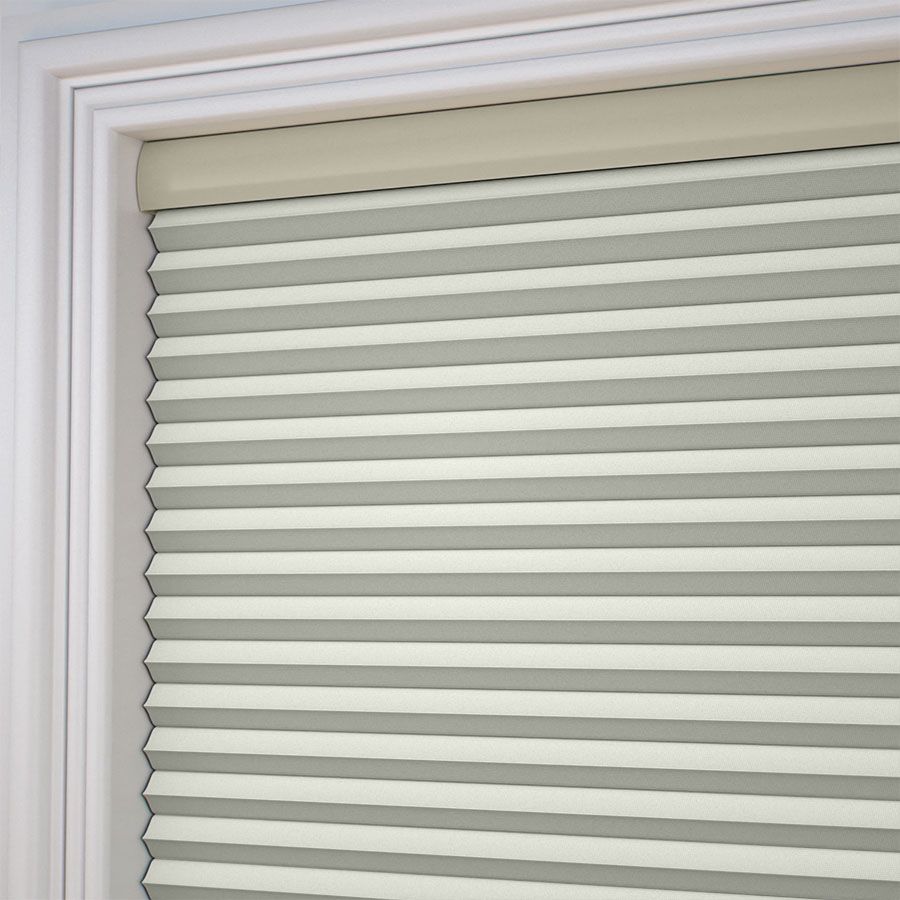
Honeycomb construction adds insulation (north wall, helpful in winter). 3.8 fabric R-value. Custom order through Home Depot. Cordless or motorized lift available.
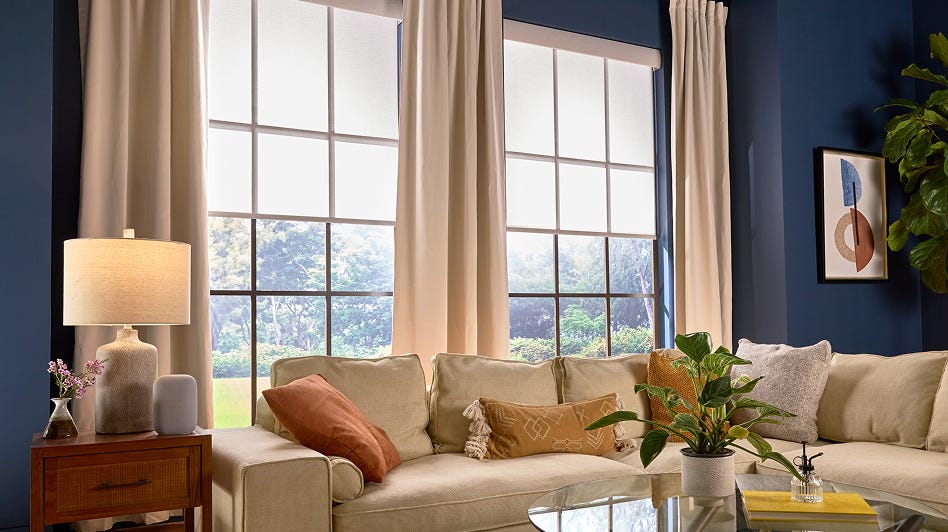
Battery-powered motorized roller, blackout fabric, side channels available. Integrates with Lutron Caseta, HomeKit, Alexa, Google. Quiet motor. Schedule it to drop at sunset, raise at sunrise. Set-it-and-forget-it for a media room.
Best build on the market. Duette Architella honeycomb-within-honeycomb construction, LightLock side-channel system for true 100% blackout, PowerView Gen 3 motorization (Bluetooth LE). Buy through a local dealer.
Lutron Serena Smart Shade · blackout roller · outside mount + side channels
At $13K-TV money, motorization is the right tier. Lutron Serena is the sweet spot: better integration story than Hunter Douglas (Caseta works with everything), cleaner install than DIY, and the schedule-to-sunset behavior means you never think about it again. If a smart-home buildout isn't in scope, drop to the SelectBlinds DIY roller — same blackout result, $500 cheaper, manual operation.
Order timing: shade can come after TV install, but install before first daytime viewing. Don't shop until window measurements are taken on-site with a real tape — the 74" spec in DECISIONS may be approximate.
08
Layout package — for installer review
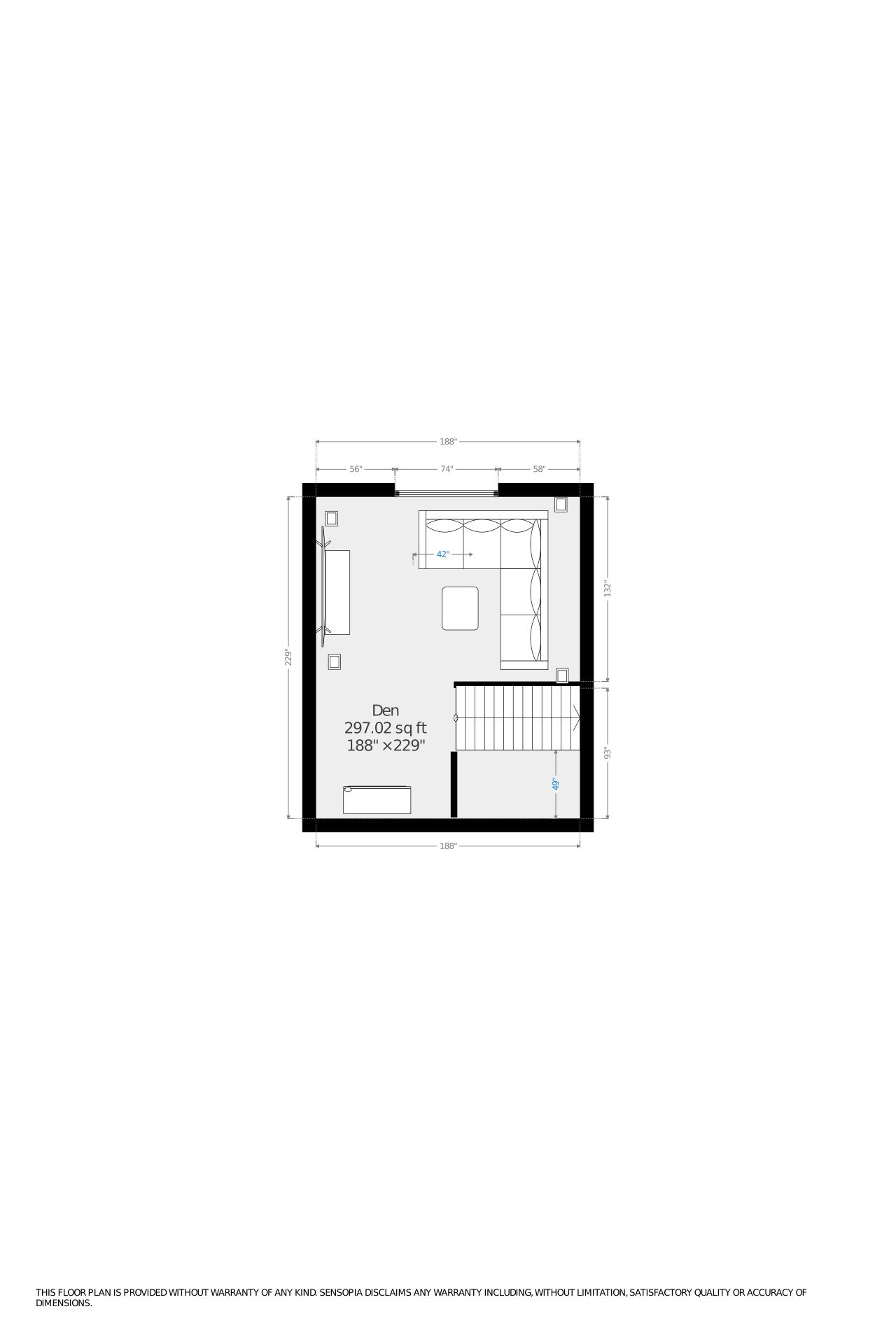
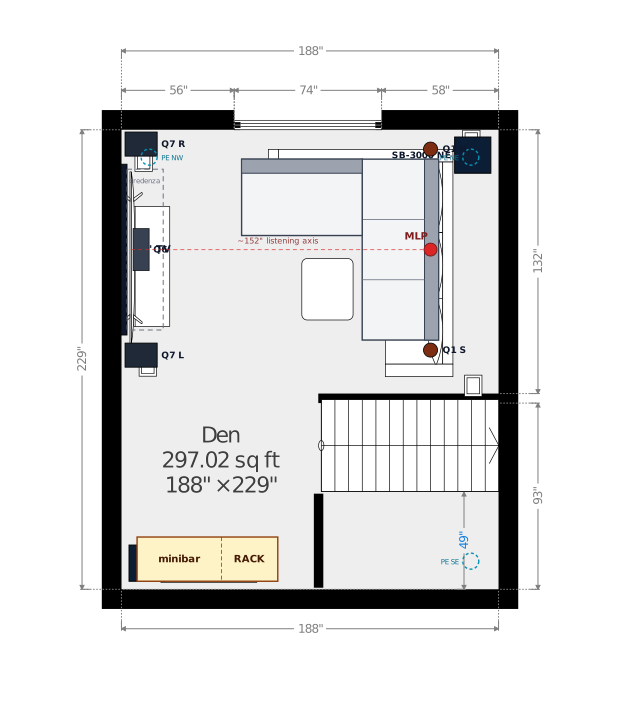
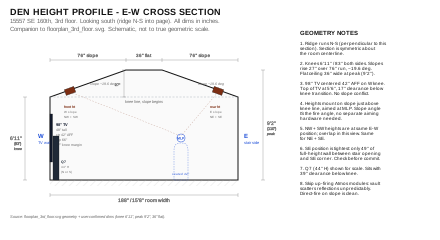
Three views to send any installer evaluating this build. First is the canonical MagicPlan export (188" × 229", 297 sqft, all dimensions verified on-site). Second is the proposed component overlay: floated Cozey Ciello XL 3+chaise-left, KEF Q7/Q6/Q1 LCR+surrounds, four SVS Prime Elevation heights direct-fired on slopes, dual SB-3000s in diagonal corners, Denon X3800H at rear-of-room rack. Third is the E-W cross section showing vault geometry (6'11" knee, 9'2" peak, 36" flat) and height speaker placement on the slopes. Front-wall architecture left intentionally open — 98" TCL X11L vs UST + acoustic-fabric "fake wall" is still being weighed. Everything else is proposed direction, open to installer refinement.
Canonical floor plan — MagicPlan export
Verified dims: 188" × 229", window 56|74|58 on N, TV wall 132" + stair opening 93" on E. PDF: floorplan_3rd_floor.pdf.
Proposed component layout (top-down)
North-up, cardinal-correct. Starting frame for installer; surround/height aiming and sub crawl positions are theirs to refine.
Symmetric A-frame, ridge runs N-S. Heights mount on slopes just above knee line, slope angle = fire angle. PDF: den_height_profile.pdf.
Open items: (1) front-wall architecture — 98" TCL X11L wall-mount vs UST + acoustic-fabric fake wall, still under evaluation; (2) exact sub positions — diagonal corner is the starting placement, but a sub crawl after Audyssey XT32 may relocate; (3) Q1 surround stand height and exact distance behind listening position — installer aim. SE height position is the tightest spot (49" of full-height wall between stair opening and SE corner) — flag for any installer to verify on walk-through.